As a leader in your organization, part of your job is to know where your employees stand regarding the goals and Metrics for their Seat. If you do not know if or where they’re missing the mark, you will miss valuable opportunities to coach them toward success. In partnering with thousands of organizations, we’ve found that many of the struggles management face regarding employees’ performance come down to something rather simple – a lack of clarity. What does this person need to achieve in order to “do their job?” That’s the missing link – and Performance Metrics are our solution.
What are Metrics?
Metrics are streamlined, specific goals for every Seat in your organization. They tie back to your company’s Metrics and are the goal posts by which you measure your employees’ success. Where a Job Description is vague and often includes irrelevant pieces that are not essential for success, Metrics are the must-do components of your employee’s job. When you’ve outlined what success looks like for every Seat in your organization, you minimize subjectivity in management and are far better able to recognize and reward the accomplishments of your people, coach your employees to be their best, and ensure everyone is on the same page regarding results.
Keep them SMART(E).
We like to utilize SMART(E) when creating our Metrics.
- Specific
- Measurable
- Achievable
- Relevant
- Timeframe
- Environment – Who or what is essential to know about?
Keep Them Synergistic.
It should come as no surprise that people tend to do better when they have a say in what they’re doing. As much as it’s possible and realistic, try involving your employees in the process of crafting their Metrics. This will greatly increase their buy in and motivation compared to expecting them to hit a bunch of goals they had no say in! That being said, there’s nothing wrong with managers taking the lead to set clear expectations of what success looks like in a Seat. Find the balance for your particular organization, the Seat, and the employee.
Keep them Simple.
Once you see the power of Metrics, it’s easy to get carried away and want to write one for every little thing – avoid this temptation. Rather, it’s far more effective to focus on the top 2-3 Metrics (5 at the most!) for every Seat.
Keep theme Somewhere.
Once you’ve established Metrics for every Seat in your organization, it’s important you do something with them! Where will those Metrics “live”? In other words, how will your employees be able to regularly review what their Metrics are and track their progress towards hitting those goals? It’s much easier to know whether or not you’re hitting the target when you can actually see it.
Let’s See This in Action!
As often as possible, it’s best to make Metrics quantifiable. This helps remove subjectivity when measuring results and determining success. However, it’s not always possible, and adding in numbers solely as an attempt to quantify results does a major disservice to your People. Let’s take a look at how you can craft pMetrics in a way that provides tangible tracking of results, giving you the insight you need to coach your People to win.
Measurable Performance Metrics
Some Seats have measurable Metrics that are a bit easier to identify (sales Seats are a perfect example of this). In those scenarios, creating a strong Metric can be as simple as including their target numbers, getting as specific as possible on what success looks like.
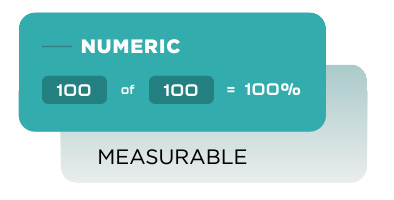
Weak Measurable Metrics:
Build relationships with companies in the assigned territory.
Strong Measurable Metrics:
Perform 20 inbound help calls per day to exceed $200k in product sales within 180 days.
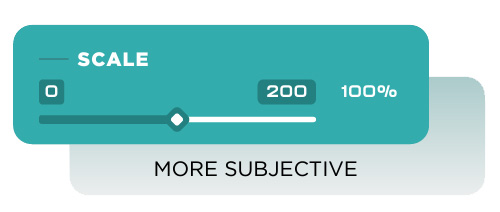
Weak Measurable Metric:
Oversee blog postings and blog team.
Strong Measurable Metric:
Manage blog content, postings, and team to deliver strategic content to our audience.
Maximize Hiring with Metrics
Once you’ve drafted Metrics for your Seat, you are far better equipped to identify when a candidate will be able to accomplish them. Consider this. You are hiring for a sales director with a quota of $1,000,000 sales in the first year. You know the number; you know when you want them to hit that number. In other words, you know what success looks like.
Now in your interviewing, instead of only being able to ask generic questions about their sales experience, you can get specific to see if this is a realistic accomplishment for this candidate. Remember it’s not primarily about whether or not they have done it before, but do they have the Skills, drive, and motivation to make it happen?
Not only is this helpful for you in identifying the right person, this also helps your candidates know exactly what you expect of them. It will help them to decide whether this is the right next step for their career. The bonus of this is that it can help minimize turnover do to misalignment on expectations.
![[brandname]-feedback-featured](https://securedb.io/kb/wp-content/uploads/2023/04/etho-feedback-featured.jpg "5 Ways to Improve Employee Engagement Through Feedback")